
OBD2 (On-Board Diagnostics II) became mandatory on all vehicles sold in Japan from 1998 onwards, though many Japanese-market models adopted it earlier. When your vehicle's ECU detects a fault, it stores a Diagnostic Trouble Code (DTC) that can be read with any compatible scanner. This reference covers the most frequently encountered codes on Japanese vehicles.
Fault codes alone do not always identify the root cause. Always cross-reference with live data readings — oxygen sensor voltages, MAF values and fuel trim figures — before replacing parts.
P0100–P0199: Air and Fuel Metering
This range covers the mass airflow sensor, manifold absolute pressure sensor, intake air temperature and related circuits. These codes are common on high-mileage Japanese engines where the MAF sensor becomes contaminated with oil vapour from the crankcase breather.
| Code | Description | Typical Cause |
|---|---|---|
| P0100 | MAF Sensor Circuit Malfunction | Dirty or failed MAF sensor |
| P0101 | MAF Sensor Range/Performance | Air leak, dirty sensor |
| P0110 | Intake Air Temp Sensor Circuit | Sensor or wiring fault |
| P0115 | Engine Coolant Temp Sensor Circuit | Failed ECT sensor |
| P0120 | Throttle Position Sensor Circuit | TPS wear or wiring |
| P0130 | O2 Sensor Circuit (Bank 1, Sensor 1) | Aged upstream lambda sensor |
| P0136 | O2 Sensor Circuit (Bank 1, Sensor 2) | Downstream sensor failure |
| P0171 | System Too Lean (Bank 1) | Vacuum leak, dirty MAF, weak fuel pump |
| P0172 | System Too Rich (Bank 1) | Leaking injector, high fuel pressure |
P0171 on Toyota and Honda
P0171 is one of the most common codes on Toyota Corolla, Camry and Honda Civic models. On these engines it is frequently caused by a small vacuum leak at the intake manifold gasket or a partially blocked idle air control valve. Before condemning the MAF sensor, check short-term and long-term fuel trim values — if both are positive and above +10%, a vacuum leak is the most likely culprit.
P0200–P0299: Fuel Injector Circuits
Injector codes on Japanese vehicles often point to high-resistance injectors caused by carbon deposits, particularly on direct-injection engines like the Toyota 2GR-FSE and Honda i-DTEC diesel.
| Code | Description | Typical Cause |
|---|---|---|
| P0201 | Injector Circuit — Cylinder 1 | Failed injector or wiring |
| P0202 | Injector Circuit — Cylinder 2 | Failed injector or wiring |
| P0261 | Cylinder 1 Injector Low | Short circuit in injector |
| P0264 | Cylinder 2 Injector Low | Short circuit in injector |
P0300–P0399: Misfire Detection
Misfire codes are among the most frequently encountered on Japanese vehicles. A P0300 (random misfire) can stem from worn spark plugs, ignition coils, low compression or fuel delivery issues. Japanese manufacturers typically recommend spark plug replacement every 60,000–100,000 km depending on plug type.
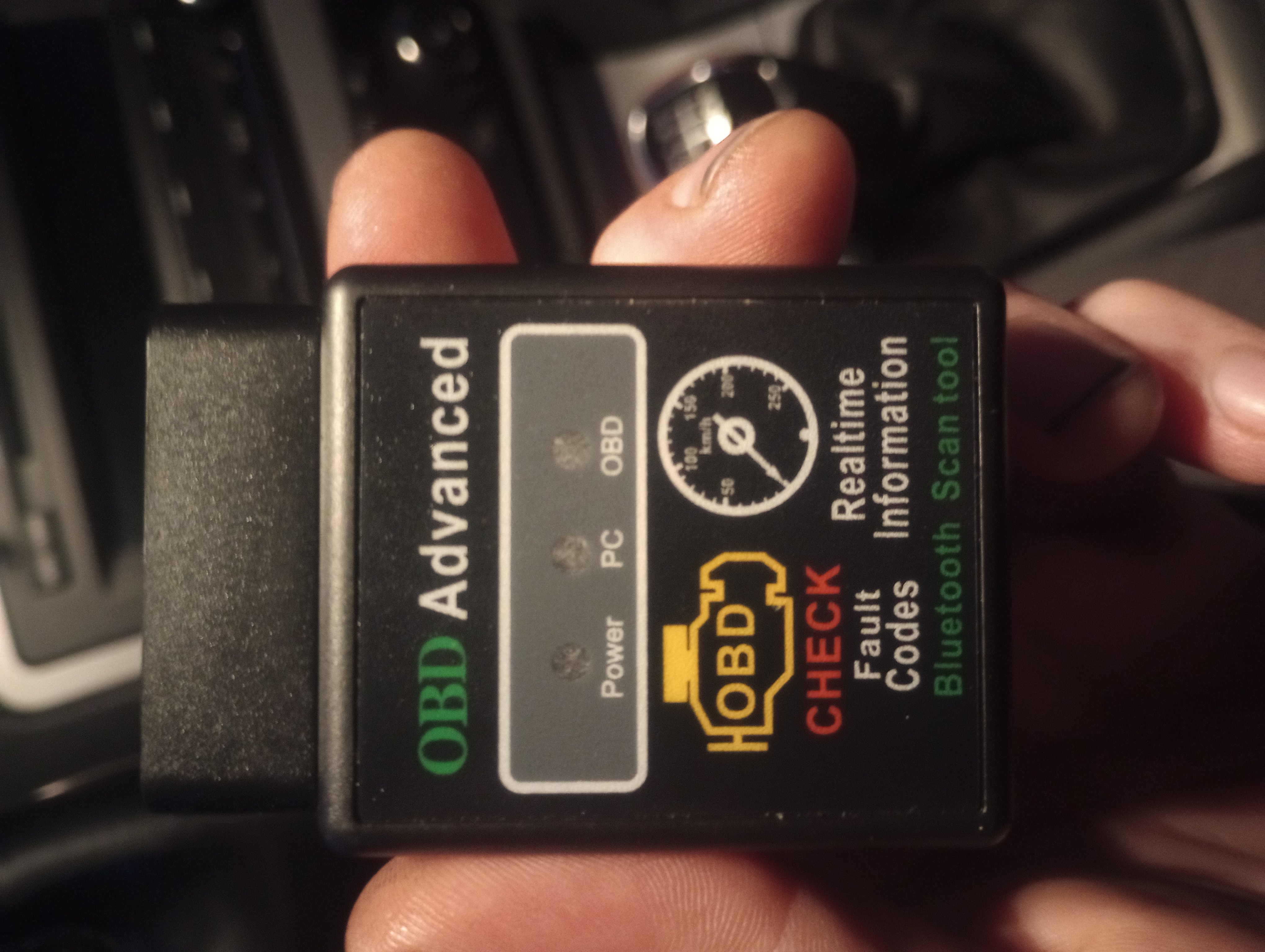
An OBD2 module displaying real-time misfire counters per cylinder
| Code | Description | Typical Cause |
|---|---|---|
| P0300 | Random/Multiple Cylinder Misfire | Plugs, coils, injectors, compression |
| P0301 | Cylinder 1 Misfire | Coil, plug, injector on cyl. 1 |
| P0302 | Cylinder 2 Misfire | Coil, plug, injector on cyl. 2 |
| P0303 | Cylinder 3 Misfire | Coil, plug, injector on cyl. 3 |
| P0304 | Cylinder 4 Misfire | Coil, plug, injector on cyl. 4 |
P0400–P0499: Emission Control Systems
This group covers EGR, evaporative emission control (EVAP) and secondary air injection. EVAP codes are particularly common in humid climates where the charcoal canister absorbs moisture over time.
| Code | Description | Typical Cause |
|---|---|---|
| P0400 | EGR Flow Malfunction | Blocked EGR valve |
| P0401 | EGR Insufficient Flow | Carbon-blocked EGR passages |
| P0420 | Catalyst Efficiency Below Threshold (Bank 1) | Worn catalyst, O2 sensor fault |
| P0430 | Catalyst Efficiency Below Threshold (Bank 2) | Worn catalyst on V6/V8 engines |
| P0440 | EVAP System Malfunction | Loose fuel cap, cracked hose |
| P0455 | EVAP System Large Leak | Missing or damaged fuel cap |
| P0456 | EVAP System Small Leak | Micro-crack in EVAP hose |
P0500–P0599: Vehicle Speed and Idle Control
| Code | Description | Typical Cause |
|---|---|---|
| P0500 | Vehicle Speed Sensor Malfunction | Failed VSS or wiring |
| P0505 | Idle Control System Malfunction | Dirty IACV, vacuum leak |
| P0507 | Idle Control System RPM High | Air leak past throttle body |
P0600–P0699: Computer and Auxiliary Outputs
| Code | Description | Typical Cause |
|---|---|---|
| P0600 | Serial Communication Link Malfunction | CAN bus fault, ECU issue |
| P0605 | Internal Control Module ROM Error | ECU memory fault |
| P0630 | VIN Not Programmed in ECM | ECU replacement without programming |
P0700–P0799: Transmission Control
Honda CVT and Nissan JATCO transmission codes fall in this range. The P0740 torque converter code is particularly common on older Honda automatics with high mileage.
| Code | Description | Typical Cause |
|---|---|---|
| P0700 | Transmission Control System Malfunction | TCM fault or sensor issue |
| P0720 | Output Speed Sensor Circuit | Failed output shaft sensor |
| P0740 | Torque Converter Clutch Circuit | Solenoid or worn TCC |
| P0750 | Shift Solenoid A Malfunction | Failed solenoid or TCM |
For manufacturer-specific codes (B, C and U codes), consult brand-specific resources. Toyota uses a proprietary diagnostic protocol alongside OBD2 — see our Toyota OBD2 guide for details on accessing enhanced data with compatible tools.